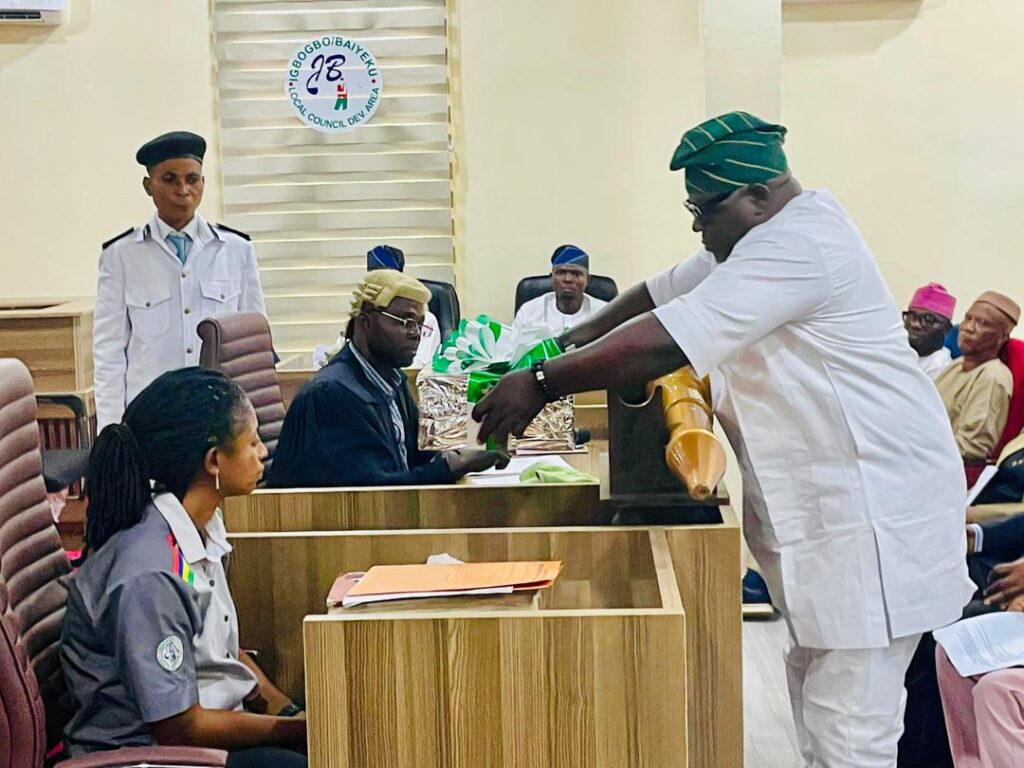
The administration of the Igbogbo/Baiyeku Local Council Development Area has presented its proposed 2026 Appropriation Bill, a development-driven financial plan valued at ₦4,998,908,360.01. The budget, themed “The Budget of Inclusive Prosperity,” reflects the council’s ambition to expand opportunities, deepen infrastructure, and improve the quality of life across all wards of the LCDA.
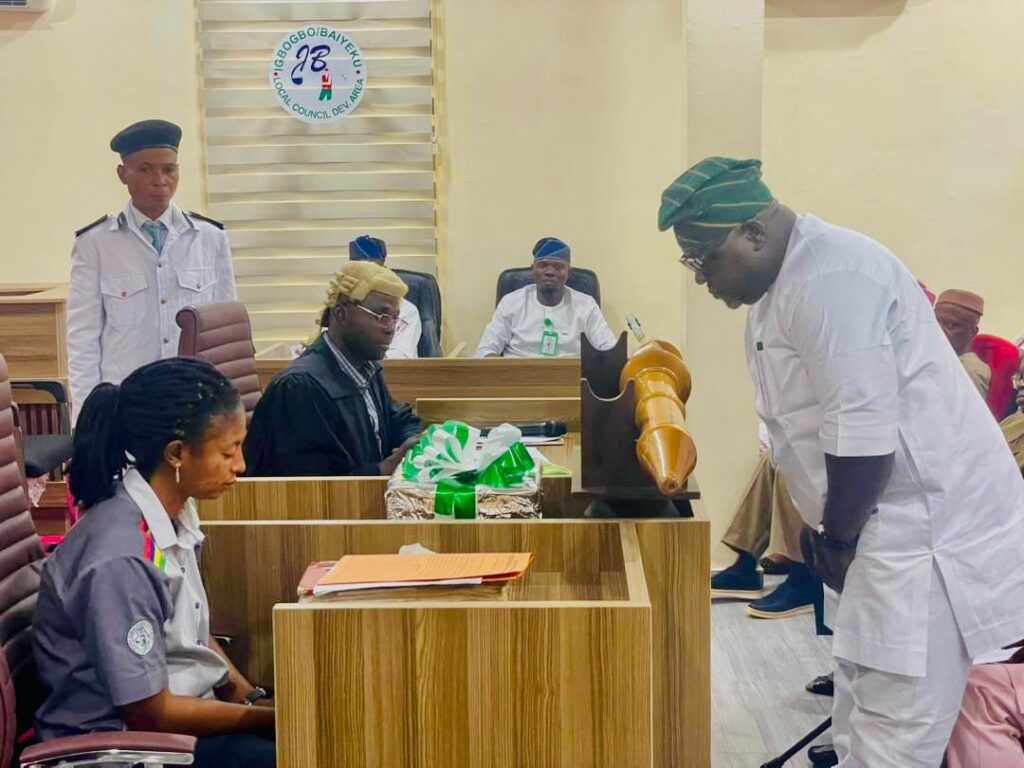
The Executive Chairman, Omo’ba Hammed Olalekan Aroyewun, presented the budget before the Legislative Council on Monday, December 8, 2025, at the Asiwaju Olorunfunmi Basorun Legislative & Administrative Building. He described the fiscal proposal as “a financial blueprint shaped by community voices and guided by the GLORY Agenda.”
Breakdown of the 2026 Fiscal Proposal
The proposed budget is structured as follows:
Recurrent Expenditure: ₦2,758,504,030.31 (55.2%)
Capital Expenditure: ₦2,240,404,329.70 (44.8%)
The Chairman stated that the allocation prioritises critical sectors such as:
Road construction, rehabilitation, and expansion
Strategic drainage and flood mitigation
Primary healthcare strengthening and preventive medicine
Education, digital training, and youth empowerment
Market development and enterprise support
Environmental improvement and waste management
Community security enhancement
Rehabilitation of public and heritage facilities
According to him, each investment aligns with the GLORY Agenda, which represents:
G – Good Governance & Green Interventions
L – Learning
O – Optimal Wellness
R – Road & Physical Infrastructure
Y – Youth and Sports Development
A Budget Built on Community Consultation
Chairman Aroyewun emphasised that the budget is the product of an exhaustive consultative process.
On November 20, 2025, the LCDA hosted its Stakeholder Budget Forum, where residents and groups outlined their priorities.
Highlights of community recommendations include:
CDAs: Roads, drainage, erosion control, and lighting
Market leaders: Modernisation, regulatory clarity, and waste solutions
Youth bodies: Digital skills, entrepreneurship support, and recreation
Community leaders: Cultural preservation and stronger security
Vulnerable groups: Social welfare and inclusivity
These submissions, he said, directly shaped the 2026 budget.
A two-day technical retreat was later held from December 4–5, bringing together executive officers, legislators, financial experts, and management staff to refine the proposals and align them with revenue projections.
Review of Achievements in the Last Four Months
Despite being in office for just four months, the Chairman highlighted several notable achievements:
Rehabilitation and expansion of Baiyeku and Ibeshe Primary Health Centres
Renovation of a block of six classrooms and toilets at Methodist Primary School, Igbogbo
Support for academic programmes, including participation in the Lagos Spelling Bee
Youth development through “Mentorship with HOA” and the first Igbogbo Youth Summit
Commencement of the Oliwo Amoju Road reconstruction
Establishment of the new Zumratul Islamiyyah Primary School, Igbogbo
He noted that several ongoing projects will receive accelerated attention under the 2026 fiscal plan.
Commitment to Transparency and Measurable Delivery
Chairman Aroyewun reaffirmed that the 2026 fiscal year will prioritise transparency, accountability, and performance-based governance.
“Every project will be tracked. Every kobo will be accounted for. Every action will serve the people,” he declared.
He further noted that the Appropriation Bill is not merely a financial document but a collective roadmap designed to drive shared prosperity and bring government closer to the grassroots.
A United, Forward-Looking Council Area
The budget presentation was attended by traditional rulers, political leaders, the Adeboruwa-in-Council, the Olubeshe-in-Council, market associations, CDAs and CDC members, youth organisations, religious bodies, security agencies, and senior government officials. Their presence underscored widespread support for the administration’s development direction.
In closing, Chairman Aroyewun reaffirmed his commitment to building an inclusive council area where development is broad-based and every community is carried along.
About the Author